Kaspersky Review 2026: Protection, Price and the US Ban Explained
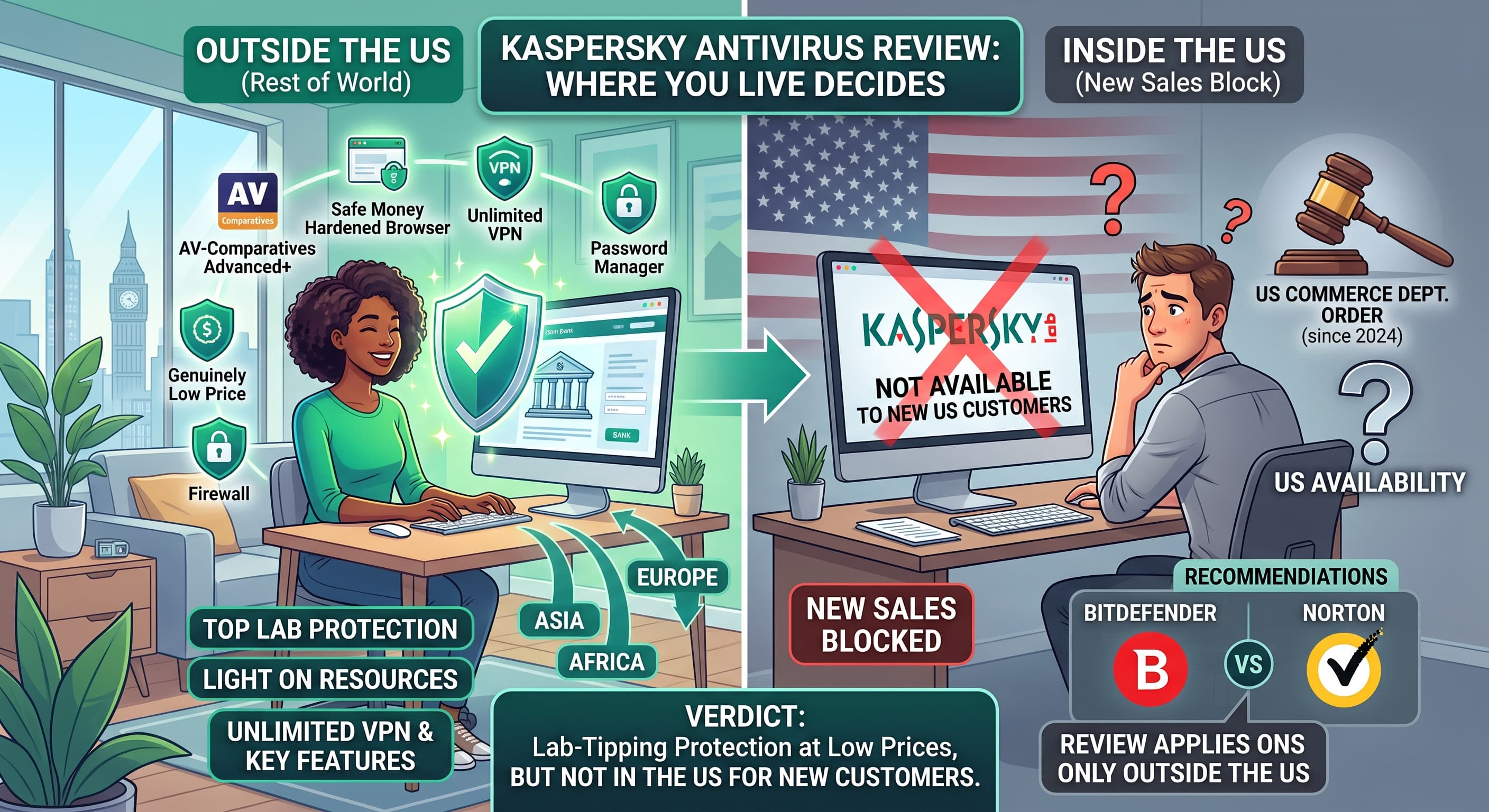
Kaspersky still tests near the top of every independent lab, but where you live decides whether you can buy it. The engine remains one of the most accurate on the market. The complication is that new consumer sales in the United States have been blocked since 2024 following a US Commerce Department order, so this review applies mainly to readers outside the US.
Protection
Kaspersky's detection rates sit alongside Bitdefender and Norton at the top of AV-Comparatives' Advanced+ tier, and it has held that position for years, not just one good testing cycle. The Safe Money hardened browser adds a genuinely useful extra layer when you're doing online banking, isolating that session from the rest of the system.
Performance
Kaspersky runs light in day-to-day use. You won't notice much lag during scans, and the impact on file copy or app launch speed is small compared to older, heavier suites. It's not quite as fast as Bitdefender in our comparisons, but the gap is small enough that most people won't feel it.
Features
The free plan covers basic antivirus scanning on Windows only, no real-time extras. Standard adds real-time protection, a firewall and performance tools for up to 3 devices. Plus brings in an unlimited VPN and password manager for 5 devices, and Premium adds identity protection, a data leak checker and 24/7 remote IT support for up to 10 devices.
Price
Standard starts at $21.99/year, making it one of the cheaper entry points on this list, with Plus and Premium priced only a few dollars higher. Again: this pricing and availability applies outside the US. If you're in the US, look at Bitdefender or Norton instead, since Kaspersky isn't sold to new customers there.
Verdict
Where it's available, Kaspersky delivers lab-topping protection at a genuinely low price. The US restriction is the one thing that changes the recommendation, so we're flagging it clearly rather than burying it in fine print.